
Hendricks County Criminal Docket Searches
Indiana MyCase is the free statewide search, and it is the natural first stop. Pick the Case, Name, or Attorney tab. Under Case, you can enter a case number, citation number, or cross-reference number. Under Name, the search takes a person or business name. It also accepts sounds-like matching, date of birth, filed-date range, status, county, and court. Not sure of the assigned court? Select Hendricks County. Narrow the results. Do not assume the first similar name is your case.
MyCase shows a public Case Summary, not the official record. When something public is missing there, call the Hendricks County Clerk at 317-745-9231. You can also visit 51 W. Main Street, Room 104, in Danville during regular office hours. The clerk handles inspection and copies. Certification, older records, and balances go through the same office. Planning to mail or fax a request? Confirm the wording, cost, and payment with the clerk first. Indiana also allows courthouse access during regular hours. It stays subject to confidentiality rules.
- Open MyCase and choose the search tab that matches the information in hand.
- Select Hendricks County, then add a court only when the assignment is known.
- Compare the case type, court, filed date, and status before opening a result.
- Read charges, settings, orders, disposition, and the Chronological Case Summary in date order.
- Ask the Hendricks clerk for an official or certified copy when verification matters.
Hendricks Criminal Week Rotation
Hendricks Local Rule 2 sets a Friday-to-Friday criminal week. It opens Friday at 12:01 a.m. It closes the next Friday at 12:00 a.m. On January 1, 2026, the rule placed all pending criminal cases in Superior Court 5. Week 1 then started on January 2. After that, new cases rotate by week and case type alike. So two cases with similar allegations can easily land in different courts.
Under the official Hendricks local rules, murder and Level 5 felony matters go to Circuit Court in Week 1. Superior 4 takes Weeks 2 and 4. Superior 5 takes Week 3. Level 6 felonies and misdemeanors cycle among Circuit and Superior Courts 1, 2, 3, and 5. A later filing may stay with the original court. That changes only if it is transferred. Trust the assigned court shown in the current case record.
Criminal Dockets: What They Show
Start at the Case Summary header. It identifies the court, case type, filed date, status, parties, attorneys, and flags. The charge block can list the count, offense date, description, statute, degree, citation, and original or final filing data. Bond information sits separate. Then comes the Chronological Case Summary, or CCS. It logs filings, service, hearings, motions, pleas, orders, judgments, sentencing, probation, and financial events. Read it oldest to newest. Note any entry that cancels or replaces an earlier setting.
| Case number | Indiana's uniform number, such as 32D05-2601-F6-000123, identifies county, court, filing year and month, case type, and sequence. |
|---|---|
| Charge | Description, statute, degree, offense date, citation, and filing details for each count. |
| Setting | Date, time, location, judicial officer, hearing type, and later cancellation information when entered. |
| Order | A public ruling or direction, sometimes with a document link when remote access is allowed. |
| Disposition | The recorded outcome for a charge or case, which may be partial and must be read with the actual order. |
Hendricks Charges Are Allegations
A filed charge is an accusation, nothing more. It does not establish a conviction. Read the final filing description, disposition, judgment, and sentence together to see how the case truly ended. A bond amount is not a fine or sentence, and release terms do not resolve the merits. A canceled hearing is not a dismissal either. The CCS may show a new date, an order continuing the matter, or a later event that supersedes the first entry.
Reading rule: Confirm the assigned court and status, read each charge, then follow the dated CCS through the latest order. Ask the clerk for the controlling document if the public summary is unclear.
Criminal Case Stages on the Docket
A Hendricks criminal record begins at filing. It opens when the filing is accepted and assigned. An initial hearing or arraignment may come next. It can capture advisements, a plea, counsel, bond, and the next date. Pretrial entries can cover appearances, discovery notices, motions, conferences, and orders. A plea hearing or trial follows if the case gets that far. The final stages may include disposition, sentencing, probation, fees, or dismissal. Not every case hits every stage. One charge may resolve before another does.
Docket flow: Filing › Initial Hearing › Pretrial › Plea or Trial › Disposition › Sentencing
Court dates can change without much notice. Confirm any setting through the current CCS and the assigned court instead of an old notice or a search excerpt. The separate Hendricks County court schedule can help you find a public calendar entry. The docket still gives the fuller event history.
Hendricks Sentencing Document Access
Indiana's MyCase access table shows something useful. Sentencing orders may be posted online in felony and misdemeanor cases even when other documents are not. An event with no document link can still be a valid docket entry. The document may need in-person inspection. It may fall outside online access for that case type, or it may be restricted.
This uneven access matters when you are following a public case. The summary can confirm that a motion, hearing, or order exists without giving its full text. For a nonconfidential filing that is not posted, give the clerk the case number, court, and document name or event date. Add the desired format. Say whether you need an ordinary or certified copy. A transcript or hearing recording takes a different route. It runs through the court reporter or the assigned court.
Hendricks County Criminal Docket Courts
Criminal cases in Hendricks County split across several courts. The Hendricks Circuit Court and Superior Courts 1 through 5 divide the docket under local assignment rules, while Brownsburg and Plainfield Town Courts take certain ordinance violations, infractions, and misdemeanors. Where a case lands depends on the charge, the arresting agency, the week of filing, and local exclusions. Danville Police infractions go to Superior Court 5. Avon Police infractions and ordinance cases route to Brownsburg, since Avon Town Court stopped operating at the end of 2023.
One quirk remains in MyCase, which may still list the old Avon Town Court as an Odyssey choice. That entry reflects record-system history, not a working counter. Old Avon matters can still be searched there. New questions and transferred records belong with the Hendricks clerk. Federal prosecutions sit outside the Indiana county docket entirely.
Hendricks CCS Versus Case File
The public CCS is an event index, nothing more. It does not tell a story. It also may not show every filing behind an entry. A docket can list a motion while the motion image stays out of view. It may note a hearing without a transcript. What the public sees depends on case type, confidentiality, date, and controls set by the court. Financial figures there are a snapshot too. Confirm restitution, interest, and the amount due with the clerk.
Ask for the right kind of copy. An ordinary copy just reproduces the document as it is. A certified copy carries the clerk's certification. A transcript comes from the court reporter. A hearing recording may involve supervised copying and redaction. Staff work fastest when you give the exact CCS date and event label.
Case-number codes help you avoid false matches in a Hendricks County docket search. Indiana's uniform number encodes county, court, filing year and month, case type, and sequence. Criminal families cover murder, Level 1 through Level 6 felony, criminal misdemeanor, miscellaneous criminal, and infraction codes. Older files may carry former felony codes. Search the full number first. Then compare the assigned court and filed date. A later filing kept by the original court under the local rule can defy the current rotation. The header controls.
Access Rules for Criminal Dockets
Indiana presumes public access to court records. Public does not mean every criminal docket or document shows up online, though. Sealed and expunged matters, juvenile cases, court-ordered exclusions, mental-health proceedings, and protected material can all be withheld. Some nonconfidential records sit only at the courthouse. So a blank result may mean a spelling slip, a filter, timing, the wrong court, or a lawful restriction. It never proves that no case exists.
Key rules:
Access Rule 4 starts with public access and calls for excluded portions to be identified without disclosing them.
Access Rule 5 lists confidential cases and documents, including sealed and juvenile material.
Access Rule 9 provides a court process for a verified request seeking access to an excluded record.
Eligible parties and their attorneys can request enhanced party access. The code stays active for 21 days. It grants access for 180 days once identity is verified by mail or in person. Everyone else should ask for a public, nonconfidential record. Or follow the court's process for excluded material. Note that Indiana Code chapter 5-14-3 yields to any court confidentiality rule or sealed order.
Hendricks Criminal Docket Sources
The official Case Summary template shows the structure behind public criminal events.
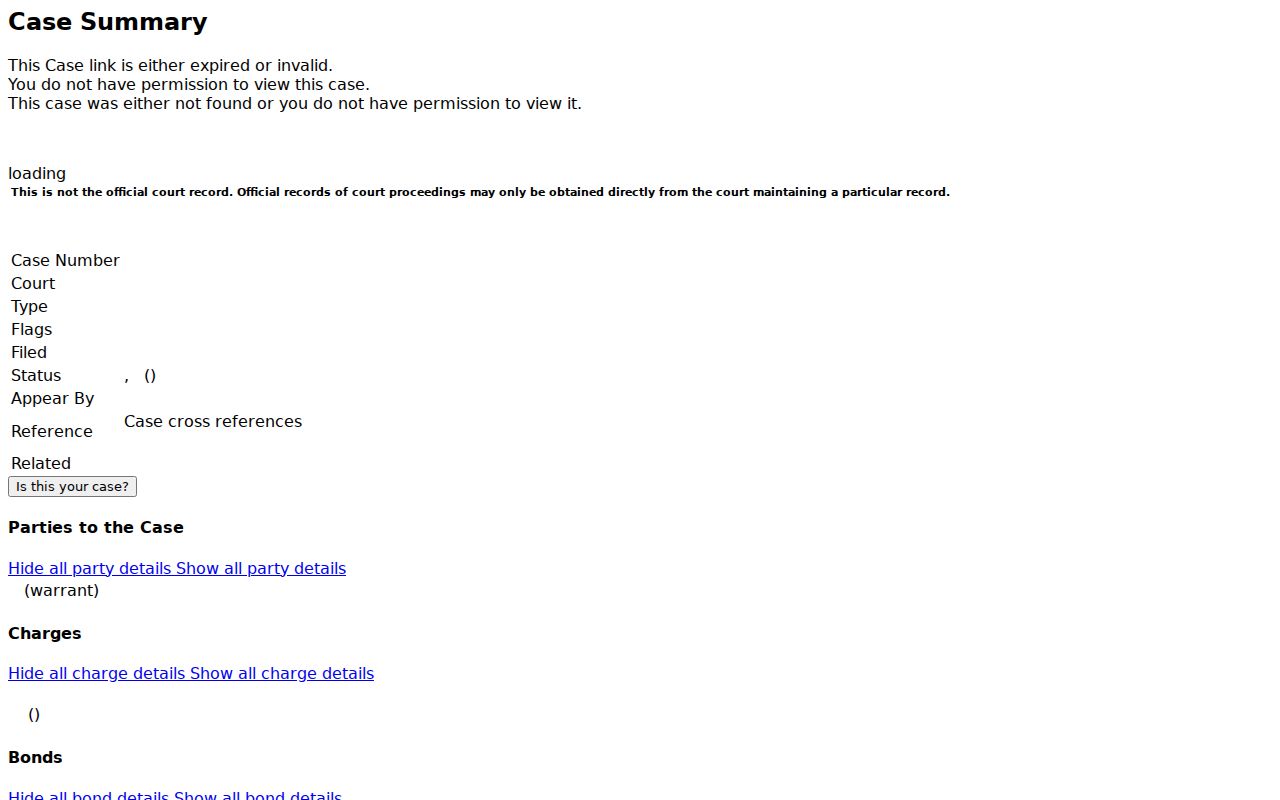
Its fields support the careful reading order used above: header, charges, settings, orders, disposition, and financial events.
Indiana's confidential-record rule sets the outer boundary on what any Hendricks County court docket search can return.
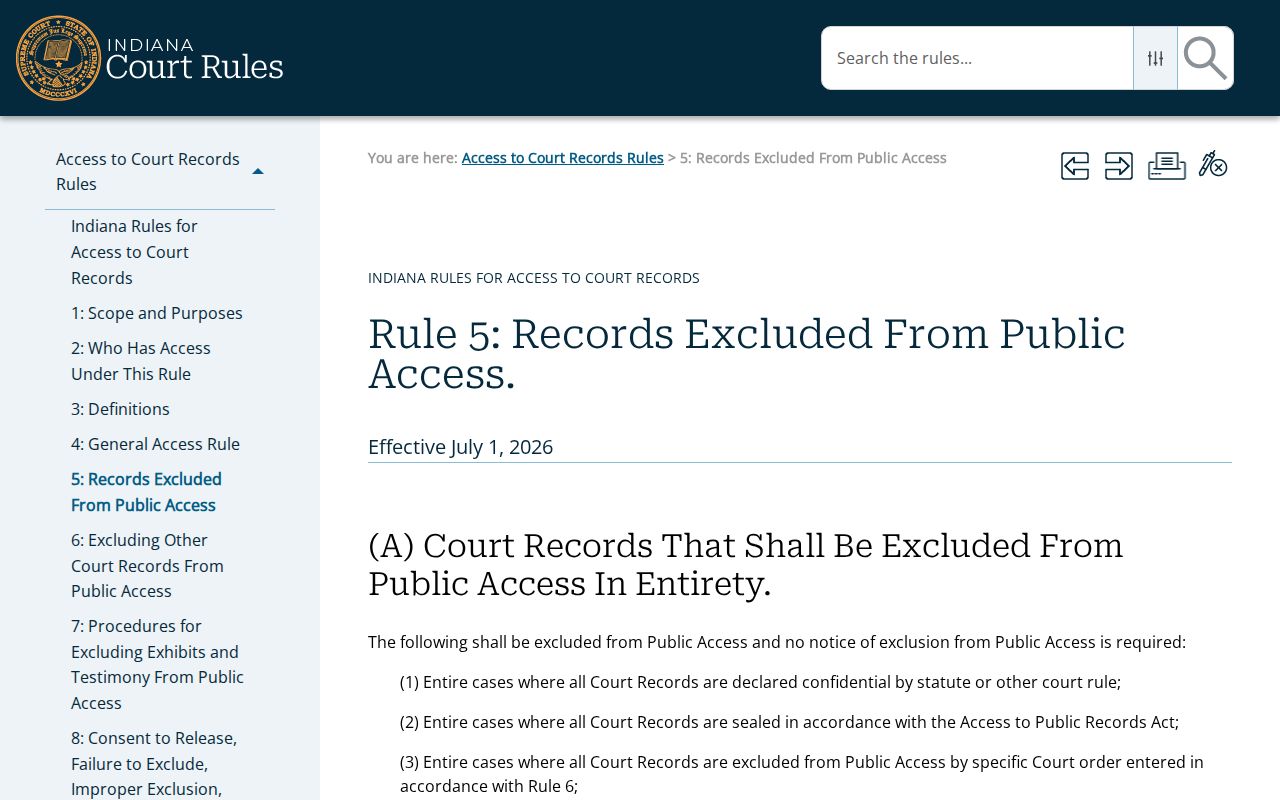
The rule explains why a lawful Hendricks case or document may be missing from the public portal.